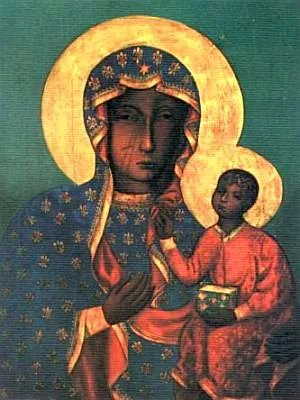
COMMENTARY ON THE ACT OF ENTRUSTMENT TO OUR LADY
ENTIRELY FOR SERVICE TO THE CHURCH
Part I
The Act of Entrustment to Our Lady has great value in the eyes of God if it is done freely and consciously. This is the condition without which the Act may be completely useless and wasted. When it is done in a conscious and free way, and having a certain attitude toward God, the Act obtains in a special way “legal” force. In this way, the Act becomes an obligation or commitment for us before God, but He will certainly not disappoint us.
In general, this Act is not essential for salvation or sanctification but, for a person called to do it in a conscious and free way, this person accepts it as God’s will and with all certainty, this person will be gifted with all the graces necessary to accomplish the vocation of holiness in the most perfect way.
As you can see, there are some conditions for this Act: A special call from God to do it, freedom, consciousness, and a certain attitude.
A special call from God: it is not by chance or accident that someone learns about the spirituality of Communion with Mary, Our Mother. It is not by chance or accident that this person follows the initial steps into it and finds it necessary to be guided by a Spiritual Father. But the most important indication that confirms that this call is God’s will is that God Himself, the Holy Spirit through the priest, the Spiritual Father of this soul, entrusts this soul to Mary.
Freedom and consciousness: the person called to this Act must be capable physically, psychologically, and intellectually. They must also understand this Act and express clearly their will to do it without external pressure from others individually or collectively, nor from internal pressure placed on themselves in order to obtain acceptance from others, etc.
A certain attitude: this attitude should express before God the wishes of this soul to build their service to the Church and their way to holiness on the foundation of humility. For instance, a specific way to do this may be to have the attitude of a child before God.
Part II
To be entrusted entirely for service to the Church means entrustment also to the Holy Spirit who conducts the Church. So, with this Act, we express our will and desire that the Holy Spirit, present and acting in the Church, use us according to the needs of the Church. All of this is based on the premise that holiness is for the Church and not for the individual. Holiness alone has no value; it has value because of the Church. Service entirely for the Church and holiness are inseparable.
From a more personal standpoint, all of the above is also useful to prevent us from viewing our sanctification from an egoistic point of view. Not everyone will find this purpose (service to the Church) attractive to their egoism. It is also a protection against obtaining the grace of sanctification as something magical. We have a natural tendency to look at supernatural life as something magical. This is a terrible mistake. Supernatural life is not perceptible by our natural senses, but it has nothing magical in it. It has been developed throughout our life since our Baptism, and when we decide to go deeper into the vocation of every human being to be holy, God will develop this gift gradually with graces expressed mainly in ordinary life events. Holiness is a gift from God that, to be received, needs a humble, contrite, and trusting soul. These attributes of a soul are obtained through the events of ordinary life perceived through the light of faith and accepted with the grace of God, which we obtain through all the benefits we receive in the Church, such as the Sacraments, Spiritual Fathers, prayer, etc.
Part III
Every spirituality has a particular way of sacrifice. Ours is done through the deepening of the perception of our spiritual misery which, as we know, is a process that will last throughout our entire life. As we know, on our own, we are incapable of making big or severe renunciations due to our weakness. However this kind of renunciation, that is, a continuous recognition of the truth about us, or in other words trying to continually
look at ourselves just as we are, is a very special minimal renunciation. God wants us to make this little effort that prepares us for grace. We are weak, but we must at least try to look at ourselves in truth. Our efforts are not efficacious, but we must make them because it is God’s will, and the graces He wants to give us in abundance depend on our attempts to make the effort. There is not too much hope from our works, but if we have something we must do, we should try to do it. In other words, we cannot rely on our works, but we need to do them.
Whoever stands in truth before God with a deep recognition of his spiritual misery looks at it in the light of Redemption, the light that the Church communicates to him. So, at the same time that a person has their misery, sinfulness, and sins present before their eyes, they also have present the “kenosis” of Jesus, His self-humiliation that was done 2,000 years ago, and also the Redemption obtained through it.
To unite the growing conviction of our spiritual misery with the consciousness of the “kenosis” of Jesus protects us from misusing God’s mercy. The remembering of Redemption, and therefore all the forgiveness that has been given to our evil, prevents us from yielding, due to our falls, to the temptation of distrust, discouragement, or doubts of God’s mercy. None of this will happen to those who stand in truth before God. Saints, although deeply aware of their spiritual misery, never did yield to the temptation of distrust or discouragement. They also never misused or abused God’s goodness because they knew perfectly well how sins hurt God terribly. We have to insist, in our need, to believe that we are the beloved children of God. It is not enough to discover the truth about ourselves – Judas did, but he did not believe that he was a beloved child of God.
Part IV
The journey to holiness is the journey of a beggar of God, the “ptochos” (poor in sprit). This beggar cannot live without God’s mercy. He is always hungering for God’s mercy because he knows that any other support is an illusion. Only God can be a support for him. Our Mother teaches us that all supports are illusions, and this means that material supports, as well as psychological and spiritual supports, are illusions. Our own strength is also an illusion. We cannot even say that our faith is strong. If we have faith, it is a miracle of grace.
If we have the particular call to follow this way, that is, the way of Communion of Life with Mary, we cannot follow any other way because this is the best way for the weakest people, such as we are. This is not an honor or a prize, it is just Mercy. If we have the call to this way, we cannot be saved without Communion of Life with Mother Mary. Theoretically, it is possible to follow other ways but, practically, it is impossible for us. This way promises us to be united with God at the end of our lives.
The hard part of this way is to unite the consciousness of our sinfulness, sins, and spiritual misery with a strong belief that we are beloved children of God. If we see only our spiritual misery, it is a big mistake, but it will also be a mistake if we hide it. However, we have to more and more discover God’s infinite mercy.
Through entrustment, we wish to imitate Jesus in order to be united with God’s will. This is the main purpose of the Communion of Life with Mother Mary as well as the way to holiness.
Part V
John the apostle is an example of a saint who, with the experience of his human and spiritual misery, had a deep consciousness of being forgiven. When he was standing at the foot of the Cross where Jesus was crucified, as he expressed it later in the Gospel, he was before a mystery that surpassed him. However, he realized that for sure, to a certain degree, he had also contributed to the passion and death of Jesus Christ. At the same time, deep in his soul, he must have had some faith in the Redemption. Recognizing with humility that he was a very weak spirit, and as a response to the testament from the Cross given to him and Mary, John did not limit himself to the human care of the Mother of Jesus, but he abandoned himself to her as his Spiritual Mother. He introduced her into his interior life. He started to live in communion with her.
The Act of Entrustment to Mary is an expression of deep trust that she, in looking at our spiritual misery, will live in us and for us in the image and likeness of her Son Jesus. When we are entrusted to Mary, we abandon ourselves to a person who lives in communion with the Holy Spirit so that He will be our Guide and that also, through this communion with her and through her, our life will be totally impregnated by the intervention of the Holy Spirit. The intervention of the Holy Spirit in the
life of Mary was what made her accomplish, in a perfect way, each and every plan of God. When we are entrusted to Mary and believe that she will live in us and through us, we have the hope that the Holy Spirit will open us fully to His gifts and that He will shape us fully in the image and likeness of Jesus Christ.
Each and every way to holiness means a way to be open to the action of the Holy Spirit that shapes us more and more in the image of Jesus. With the Act of Entrustment, we are committed to a conscious, reasonable, and willful obedience. This is not a juridical or legal obedience, but an obedience that comes from a deep willingness to be submitted in everything to God’s will. This will comes from the presence and intervention of the Holy Spirit in our souls and, at the same time, is a reasonable obedience, respectful of the natural order and the truth that grace builds on nature, so that it will not degrade into pathological forms. The obedience that leads us to a total abandonment to the intervention of Mary in our lives and, through her, to the intervention of the Holy Spirit, causes that He becomes the Lord of our life, actions, way of thinking, prayer, and everything else that we live. This obedience will lead us to communion with the Redeemer in the Holy Spirit, which is expressed in the imitation of Jesus, and also in the imitation of His obedience even to death.
Every one of us has to die someday. The time for this and the circumstances are not very important. The important thing is that it should be a death in communion with Jesus, and communion with Jesus is communion with the Crucified.
Part VI
Our entrustment to Our Mother must be supported by faith because faith is the way to union and to communion with God. Saint John of the Cross said that faith is the way we use to be united with God while here on earth. It is obvious that faith will disappear in the future life in heaven, but our journey toward union with God in heaven is a pilgrimage of faith. The Act of Entrustment itself is an act of faith and a program of life in faith. The final objective of this Entrustment is that it will no longer be we who live, but Jesus through Mary who lives in us.
Walking in this way of faith, we wish to die gradually to everything that makes it difficult to submit ourselves to God’s will and prevents Jesus from living in us. When we make the decision for a faith-filled life, we accept that, in the process of the growth of our faith, we should be deprived of the illusions regarding human supports. As our communion with God through Mary becomes deeper, in faith and through faith, our need to be supported by emotions, senses, human thinking, etc. will become diminished. In the end, all our nature, all the sensible sphere of our nature, will be purified of whatever makes it difficult for us to adhere to God in faith and to whatever prevents or makes superficial our communion with Him.
This Act of Entrustment must be reflected in concrete acts, otherwise our faith will be a dead faith (Cf.James2:20). Our Entrustment to Mary is actualized in communion with her, and communion with her leads us, here on earth, to a total entrustment to the Church. It leads to a particular engagement with the Church through actions suitable to the specific vocation of each one of us. The entrustment to the Church, with total respect for the individual vocation, is the way of fulfilling our own vocation to holiness. It is the program that directs our life toward union with God and participation in the interior life of the Holy Trinity.